
What to do in the first hours of a roof leak emergency
By Mei Tan · Updated 2026-07-20
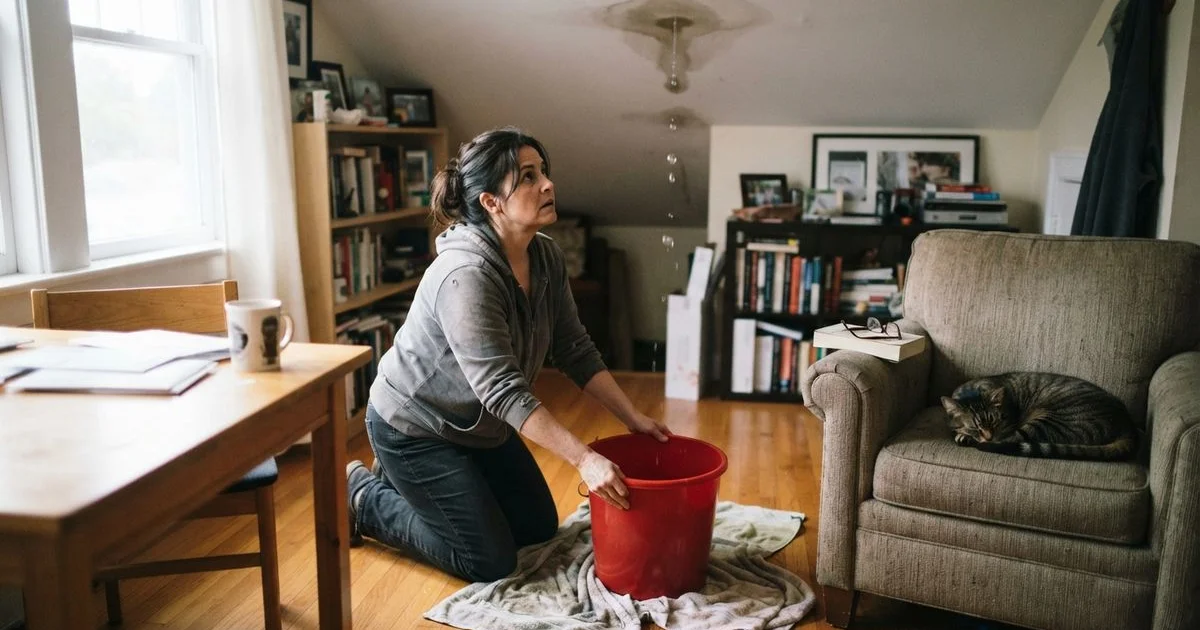
A ceiling stain spreading during a storm, or worse, water actively dripping through a light fixture, is one of the more stressful moments of homeownership. What you do in the first hour matters more for limiting damage than most people realize. Here’s a clear-headed sequence to follow.
Step one: protect people and electronics first
If water is coming through near an electrical outlet, light fixture, or ceiling fan, treat that area as a hazard and keep people away from it. If it’s safe to do so, shut off power to the affected circuit at the breaker panel. Move furniture, electronics, and anything valuable out from under the leak before worrying about the leak itself.
Step two: contain the water
Place a bucket or container under the drip, and if the ceiling is visibly bulging with trapped water, a controlled small puncture with a screwdriver in the center of the bulge, into a bucket held underneath, can release the water in a controlled way rather than letting it collapse a larger section of ceiling. This sounds counterintuitive but is a standard practice for limiting damage. If you’re not comfortable doing this, skip it and just contain what’s already coming through.
| Situation | What to do | What to avoid |
|---|---|---|
| Water near outlets or fixtures | Shut off power at breaker if safe | Touching wet electrical components |
| Active drip through ceiling | Bucket underneath, move belongings | Ignoring it and hoping it stops |
| Bulging, water-filled ceiling | Controlled release with a small puncture | Letting pressure build until it collapses |
| Storm still in progress outside | Stay inside, document from windows | Going on the roof during weather |
Step three: document before you clean up
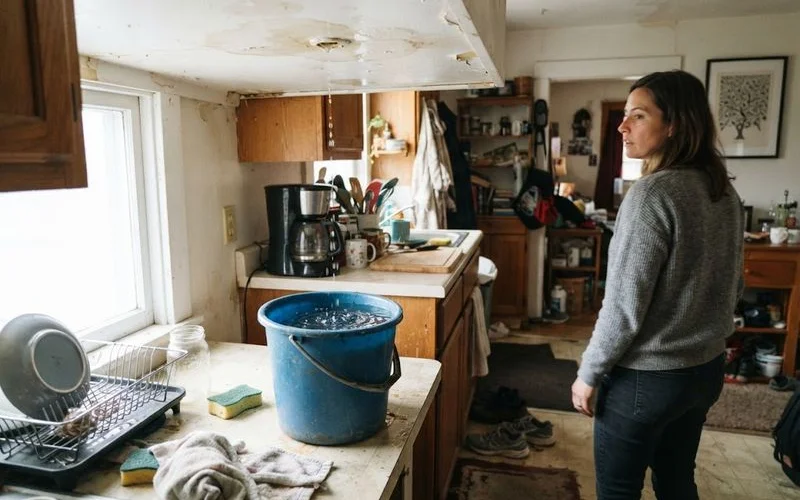
Take photos and video of the leak, the water damage, and anything visibly wrong on the exterior that you can safely see from the ground, before you start moving things or drying up water. This documentation supports an insurance claim later and costs you nothing to do while you’re already dealing with the mess.
Step four: call for help, but don’t go up yourself
Never get on a roof during a storm, in high wind, or when shingles are wet, regardless of how urgent the leak feels. Once it’s safe, call a roofer. Many companies in Georgia offer emergency roof repair for active leaks, especially during storm season, and can install a temporary tarp or seal to stop further water intrusion until a full repair happens.
If a tree limb or debris has punctured the roof
A larger breach, a fallen branch through the decking, for example, needs more than a bucket. Move everyone away from the room directly below, since a compromised section of ceiling or roof structure can fail further without warning. Do not attempt to remove a fallen limb from the roof yourself. Wait for weather to clear completely and call a roofer or, for a large limb entangled with power lines, the utility company first.
What a temporary tarp actually does
A professionally installed tarp is meant to be a stopgap, not a fix. It buys time between the emergency and a proper repair by keeping additional rain out, but it isn’t airtight and shouldn’t be treated as a long-term solution. If a tarp has been up for more than a couple of weeks without a permanent repair scheduled, that’s worth following up on, since prolonged tarp coverage can trap moisture underneath in ways that create their own problems.
Keep a small emergency kit on hand
A few inexpensive items kept somewhere accessible make the first response faster: a couple of large buckets, a roll of heavy plastic sheeting, work gloves, and a flashlight. None of these replace a professional repair, but having them ready means you’re not searching the garage in the middle of a storm while water is actively coming through the ceiling. Building this kit before the weather turns is easier than scrambling once a leak starts; our guide on getting your roof ready for Georgia’s storm season covers what else to prepare in advance.
After the immediate crisis
Once the leak is contained and documented, contact your insurance company if the damage looks storm-related, and get a written inspection from a licensed roofer to determine the cause and the scope of repair needed. Acting within the first day or two, rather than waiting, meaningfully reduces the risk of secondary damage like mold or rotted decking. Search our directory for emergency-capable roofers near you, vetted per our methodology.
This is general safety information, not a substitute for professional judgment in your specific situation. If you’re ever unsure whether it’s safe to act, wait for a professional rather than risk injury.
Questions people ask
- Should I go on my roof during a storm to check for damage?
- No. Never get on a wet or storm-damaged roof, especially during active weather or high wind. Assess from the ground or through windows, and wait for conditions to clear before anyone goes up.
- Can I use a bucket and tarp as a temporary fix?
- Yes, for containing water damage inside the house. A tarp over an exterior leak point should only be placed by someone experienced doing it safely, and never during active wind or rain.
- How fast should I call a roofer after discovering a leak?
- Call as soon as it's safe to do so, ideally the same day. Many Georgia roofers offer emergency service for active leaks, especially during storm season, and a faster response limits interior damage.
- Will my insurance company want to see the damage before I do anything?
- Take photos before you move anything or start cleanup, but don't wait to protect the home from further damage. Most policies expect you to take reasonable steps to prevent additional loss, and documentation covers you either way.