
Getting your roof ready for Georgia's storm season
By Mei Tan · Updated 2026-07-31
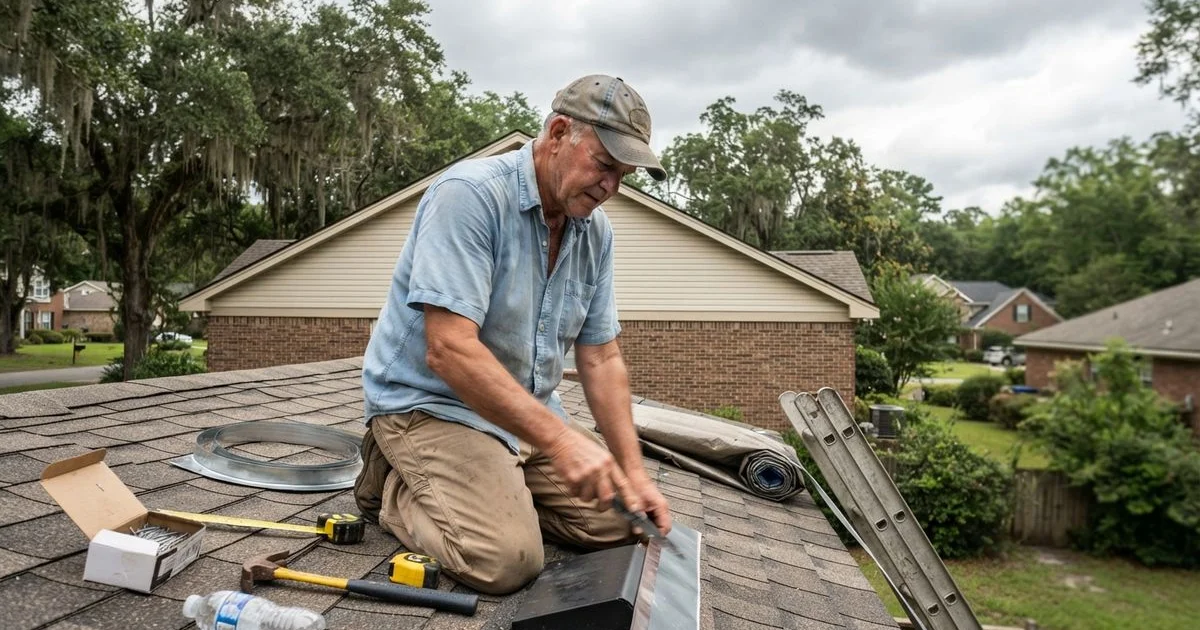
Georgia sees two distinct storm patterns each year: severe thunderstorms with hail and high wind that peak in spring and early summer, and tropical systems that can bring sustained wind and heavy rain later in the season. A roof that’s already showing minor wear tends to be where storm damage actually happens, which makes seasonal prep worth the hour or two it takes.
The pre-season checklist
| Check | What you’re looking for | Why it matters |
|---|---|---|
| Shingles or panels | Loose, lifted, curling, or missing pieces | Most likely failure point in high wind |
| Gutters and downspouts | Debris buildup, sagging, loose brackets | Clogged gutters back water up under roofing |
| Flashing around chimneys, vents | Cracked sealant, rust, gaps | Common leak entry point during driving rain |
| Overhanging tree limbs | Branches near or touching the roof | Impact risk and abrasion damage |
| Attic (if accessible) | Water stains, daylight through the roof | Signs of an existing, undetected leak |
Start with what’s visible from the ground
Walk the perimeter of your home and look at the roofline with binoculars if you have them. You’re looking for shingles that look lifted at the edges, obvious gaps, or discoloration that might indicate an existing leak. This isn’t a substitute for a professional inspection, but it’s a useful first pass that costs nothing.
Clear gutters and check drainage
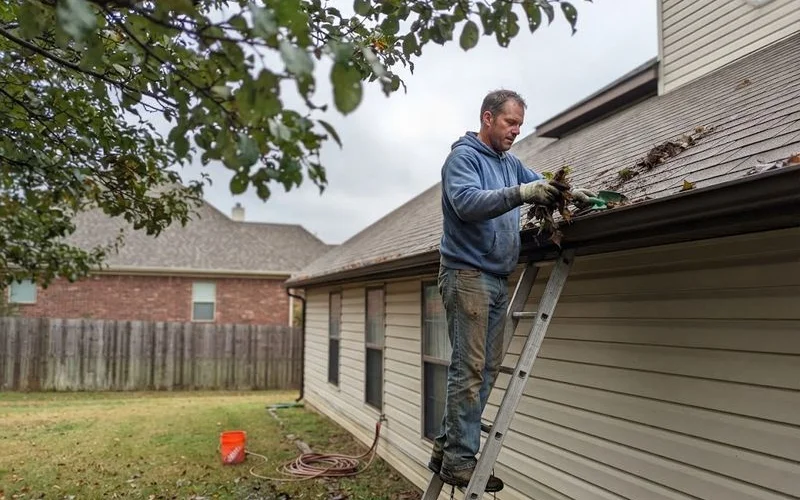
Clogged gutters are one of the most preventable causes of storm-related water damage. When gutters back up during heavy rain, water can work its way up under the roof edge instead of draining away, especially on lower-pitched sections. Clearing debris now, before the heaviest rain of the season, is a cheap and effective step.
Trim trees back from the roofline
Overhanging branches do damage two ways: direct impact if a limb breaks off during high wind, and slower abrasion damage from branches rubbing against shingles every time it’s windy. Trimming limbs back a reasonable distance from the roof reduces both risks and is far cheaper than the repair that follows a fallen branch.
Check your attic ventilation too
Storm prep tends to focus on the exterior, but attic ventilation plays a role in how well a roof holds up over a hot Georgia summer. Poor airflow traps heat and moisture under the roof deck, which accelerates shingle aging from underneath and can worsen condensation issues during heavy rain. If your attic feels noticeably hotter than expected on a summer afternoon, or you notice moisture on the underside of the decking, it’s worth having a contractor check whether the ventilation is adequate for your roof’s size.
A quick supply check before the season starts
It also helps to know where things are before you need them in a hurry: a working flashlight, a tarp sized for your roof if you plan to keep one on hand, and your insurance policy number and agent contact saved somewhere easy to find. None of this prevents storm damage, but it saves real time and stress in the middle of an actual event, when finding a phone number shouldn’t be competing with more urgent priorities. If a leak does start despite the prep, our guide on the first hours of a roof leak emergency walks through what to do right away.
When it’s worth calling a professional
If your roof is more than 10 to 15 years old, has visible wear, or you simply can’t get a good look at it from the ground, a pre-season inspection is worth scheduling. A professional can check flashing, decking condition, and attic ventilation in ways a ground-level walk-around can’t, and catching a small issue in April is a lot less stressful than dealing with an active leak in July.
Make prep a yearly habit, not a one-time task
Roof condition changes year to year, so treating this checklist as an annual routine, ideally in early spring before storm activity picks up, catches new wear before it becomes a real problem. Setting a recurring reminder each year is a simple way to make sure it actually happens rather than getting pushed aside until damage forces the issue. A short walk around the house with a checklist in hand costs nothing and consistently pays for itself compared to the cost of an unaddressed leak.
Search our directory for roofing contractors who offer seasonal inspections, evaluated per our methodology.
Questions people ask
- When does storm season peak in Georgia?
- Severe thunderstorms, including hail and high wind, are most common in spring and early summer, while tropical systems from the Atlantic and Gulf can bring wind and heavy rain into late summer and early fall.
- What's the most important thing to check before storm season?
- Loose or missing shingles and clogged gutters. Loose shingles are the most likely point of failure in high wind, and clogged gutters cause water to back up under the roofline during heavy rain.
- Should I trim trees near my roof before storm season?
- Yes. Overhanging limbs are a common source of storm damage, either from direct impact or from constant abrasion against shingles in wind. Trimming branches back from the roofline reduces both risks.
- Is a pre-storm-season inspection worth it if my roof looks fine?
- It's still worth it. A lot of developing issues, lifted shingle edges, worn flashing seals, aren't visible from the ground, and catching them before a storm is far cheaper than dealing with the leak afterward.