
Is roof damage covered by homeowners insurance in Georgia?
By Mei Tan · Updated 2026-07-10
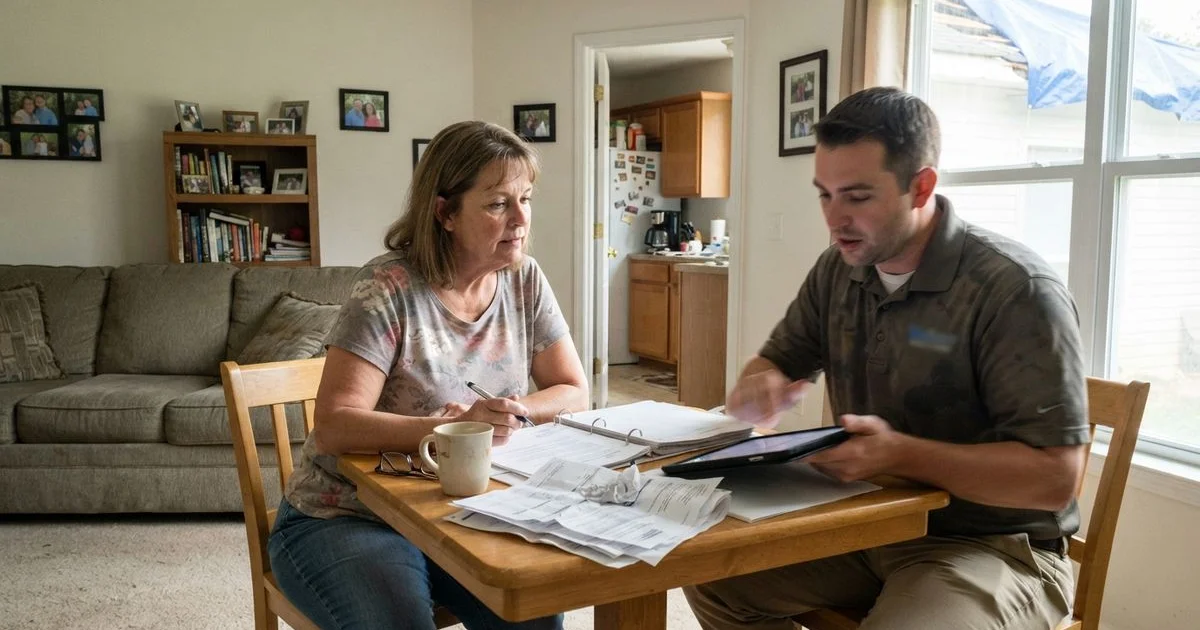
After a storm, the first call for a lot of Georgia homeowners isn’t to a roofer, it’s to their insurance agent. Whether that call leads anywhere depends heavily on what caused the damage and what your specific policy covers. This guide walks through what’s typically covered, what usually isn’t, and how a roof inspection fits into the claims process.
What’s usually covered
Most standard homeowners policies cover roof damage caused by a sudden, identifiable event: wind, hail, a fallen tree limb, or fire. If a storm rips off shingles or hail dents a metal roof, that kind of sudden damage is the core case insurance is built for. Coverage typically extends to both the roof covering itself and, if the damage let water in, some of the resulting interior damage.
What’s usually excluded
Insurance generally does not cover damage from gradual wear: an aging roof that’s simply worn out, granule loss from years of sun exposure, or damage that built up slowly from a maintenance issue you could have caught earlier. Insurers frame this as the difference between a “sudden and accidental” event and ordinary deterioration, and adjusters look closely for signs of the latter before approving a claim.
| Likely covered | Usually excluded |
|---|---|
| Wind or hail damage | Age-related wear and granule loss |
| Fallen tree limb impact | Pre-existing leaks not reported promptly |
| Fire damage | Poor maintenance or neglect |
| Sudden storm-caused leaks | Damage from an unlicensed or unpermitted repair |
How roof age changes things
Many Georgia insurers apply actual cash value, rather than full replacement cost, to roofs past a certain age, often somewhere around 15 to 20 years, even when the damage itself is a covered event like hail. That means an older roof’s payout is reduced by depreciation, which can leave a meaningful gap between the claim payout and the actual cost of replacement. Check your policy’s specific roof coverage schedule rather than assuming standard terms apply.
Understanding your deductible
Some Georgia homeowner policies carry a separate, percentage-based deductible specifically for wind and hail damage, rather than the flat dollar deductible that applies to most other claims. That percentage is usually calculated against your home’s insured value, which can make a wind or hail deductible considerably larger than people expect, sometimes a few thousand dollars on an average home. Check your declarations page for a separate wind or hail deductible line before assuming your standard deductible applies to storm damage.
Building a claim that holds up
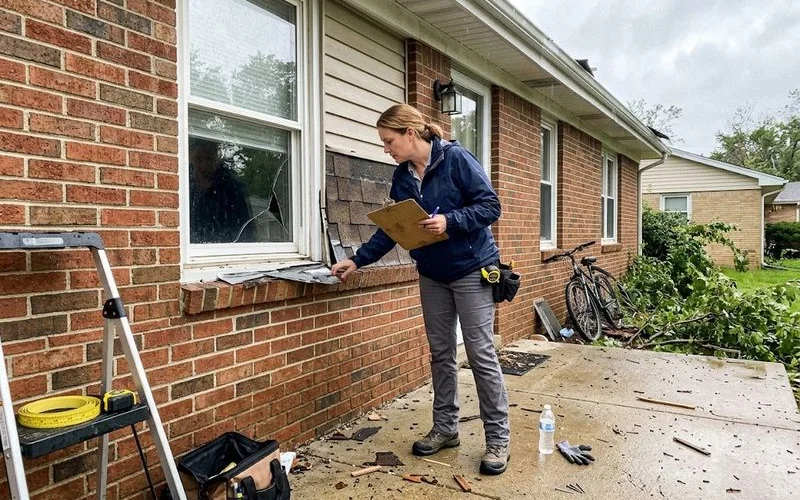
Document everything before repairs start. Photograph damage from multiple angles, note the date of the storm, and keep any physical evidence like hail-damaged gutters or downed branches. A written inspection report and repair estimate from a licensed contractor gives the adjuster something concrete to compare against their own assessment, and it’s common for that second opinion to catch damage an initial inspection missed. If you haven’t had the roof looked at yet, see our guide on free and low-cost roof inspections in Georgia to find out what’s really free before you call an adjuster.
Filing the claim promptly
Most policies set a window for reporting damage, and waiting too long can weaken a claim or, in some cases, give the insurer grounds to question whether the damage is actually storm-related versus gradual wear that happened afterward. File as soon as it’s reasonably possible once you know the damage exists, even if you’re still gathering documentation, since most insurers allow you to add details and photos to an already-open claim.
If your insurer’s offer seems low relative to your contractor’s estimate, you can request a re-inspection or, in some cases, invoke your policy’s appraisal clause to resolve the disagreement. Read your policy’s specific language on this before assuming either option applies. A licensed Georgia roofing contractor can also help translate the adjuster’s report into plain terms.
Working with your contractor and the adjuster together
Some homeowners find it useful to have their contractor present, or at least reachable by phone, during the adjuster’s visit, since a contractor familiar with roofing damage patterns can point out issues the adjuster might otherwise overlook. This isn’t about adversarial posturing, it’s about making sure both parties are looking at the same roof with the same level of scrutiny before a coverage decision is finalized.
This is general information, not insurance or legal advice. Your policy’s exact terms control what’s covered, so read it closely or ask your agent directly before making decisions based on general guidance like this. See our methodology for how contractors on this site are evaluated, including for insurance claim experience.
Questions people ask
- Does homeowners insurance cover a roof leak?
- It depends on the cause. A leak from a sudden event like wind or hail damage is typically covered. A leak from years of wear, poor maintenance, or an aging roof usually is not.
- Will my insurance cover a full roof replacement or just repairs?
- That depends on the extent of the damage and your policy's roof coverage terms. Some policies pay full replacement cost for storm damage, others apply depreciation (actual cash value), which lowers the payout on an older roof.
- Does the age of my roof affect my claim?
- Yes. Many Georgia insurers reduce coverage or move to actual cash value once a roof passes a certain age, often 15 to 20 years, even for storm damage. Check your policy's specific roof schedule.
- What should I do before an adjuster visits?
- Photograph all visible damage from the ground and, if it's safe, closer up. Keep any hail or debris as evidence. Get a written estimate from a licensed contractor to compare against the adjuster's assessment.