
What gutter installation costs and what drives the price
By Mei Tan · Updated 2026-07-08
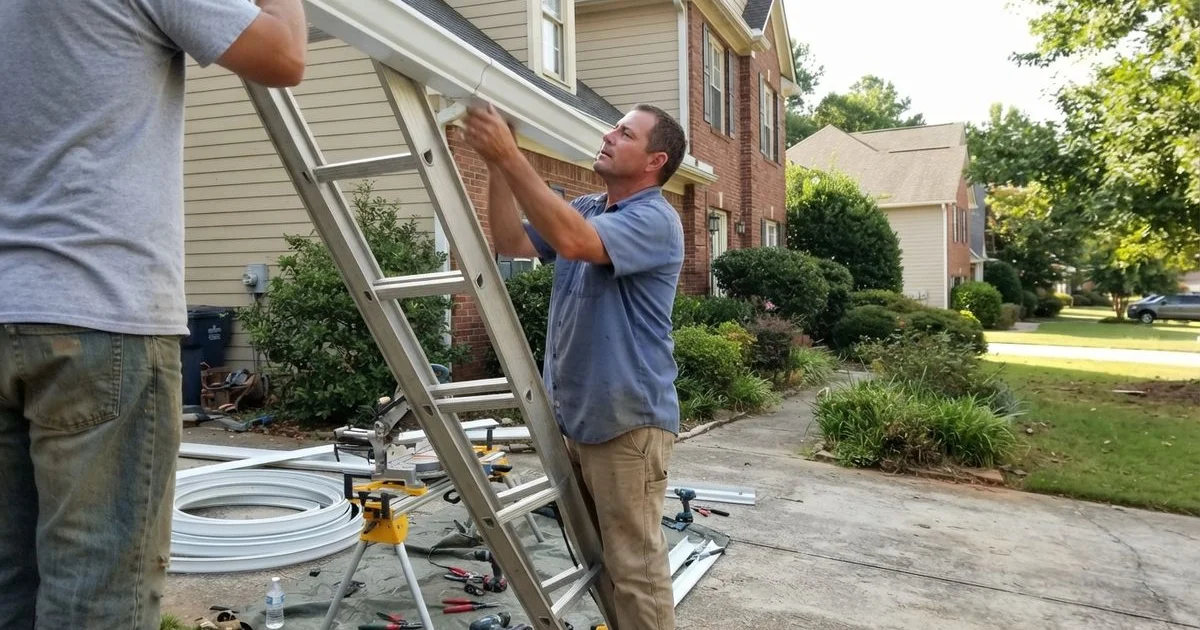
Gutter installation is one of those jobs that looks simple from the ground but has enough variables to make quotes swing widely. This guide breaks down what a typical Georgia home actually pays and what changes that number, so you can budget before contacting an installer through our directory.
Typical cost by material
The figures below assume about 180 linear feet of gutters, roughly what a single-story home needs, without guards.
| Material | Typical installed cost |
|---|---|
| Vinyl | $900 - $1,300 |
| Aluminum | $1,400 - $1,950 |
| Steel | $2,000 - $2,800 |
| Copper | $4,300 - $6,050 |
Aluminum is the most common choice in Georgia because it resists rust, handles the state’s humidity well, and sits in a reasonable middle price range. Vinyl costs less but becomes brittle faster in summer heat. Steel holds up to falling limbs better than aluminum. Copper is a long-term, high-end choice that develops a patina over time and can last 50 years or more.
What gutter guards add
Adding gutter guards typically increases the installed cost by around 35%. On an aluminum system, that pushes a $1,400 to $1,950 job closer to $1,850 to $2,600. In parts of Georgia with heavy pine or oak tree cover, guards can cut the number of cleaning visits from several times a year down to once, which offsets the added cost over a few seasons.
What actually changes the price
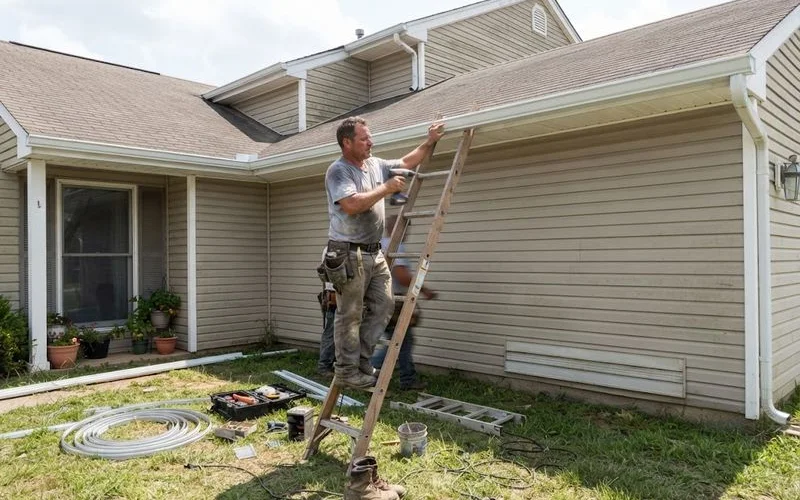
- Linear footage. More perimeter means more material and labor, the most direct driver of cost.
- Gutter size. Standard 5-inch gutters handle typical rainfall; 6-inch gutters cost more but move more water, which matters on steep or large roof sections.
- Downspout count. Each downspout adds material and installation time, and homes with complex rooflines need more of them.
- Removal of old gutters. Tearing down and hauling away failing gutters adds labor that a bare “install” quote sometimes leaves out.
- Fascia repair. If wood behind the gutters is rotted, it needs to be replaced before new gutters go up, and that’s easy for a quote to miss until installation day.
Why gutters matter more than they get credit for
It’s easy to treat gutters as an afterthought next to a roof replacement, but they do real structural work: directing water away from the foundation, siding, and landscaping. Undersized or poorly sloped gutters send water pooling right at the foundation line, which over time can contribute to basement moisture and even foundation settling in the wrong soil conditions. Getting the sizing and slope right during installation matters as much as the material choice.
Timing gutters with a roof project
If you’re already planning a roof replacement, it’s often worth replacing worn gutters at the same time. Bundling the work can reduce labor costs since the crew is already on-site with equipment set up, and it avoids the risk of new roofing draining into old, failing gutters that undercut the benefit of the new roof. Ask your roofing contractor whether they handle gutters directly or work with a gutter specialist as part of the same project. If a full roof is also on the table, what a new roof costs in Georgia can help you plan the two budgets together.
Getting a quote you can trust
Ask for a written quote broken out by linear footage, material, downspout count, and whether guards and old-gutter removal are included. A quote that’s a single flat number without that detail makes it hard to compare against a competing bid on equal terms, and makes it easier for extra costs to show up later as change orders.
One-piece versus sectional gutters
Most modern residential installations use one-piece gutters, formed on-site from a single continuous length of material rather than joined sections. This continuous style has far fewer joints where leaks and clogs typically start, which is part of why it’s largely replaced older sectional systems for new installations. If a quote specifies sectional gutters without explanation, ask why, since it’s worth understanding whether that’s a cost-driven choice or simply what the installer defaults to.
What to expect on installation day
A typical gutter installation on a single-story home takes a crew most of a day, longer for larger homes or more complex rooflines. The crew measures and forms the gutter material on-site using a portable machine, attaches hangers at consistent intervals along the fascia, sets the correct slope toward each downspout, and connects downspouts to direct water away from the foundation. A final walkthrough should confirm the slope drains properly and that downspouts empty at a safe distance from the house, not right against the foundation where they started.
For more on how we evaluate the gutter and roofing contractors listed here, see our methodology.
Questions people ask
- How much does it cost to install new gutters on an average home?
- For about 180 linear feet, typical for a single-story home, aluminum gutters run roughly $1,400 to $1,950. Vinyl costs less, steel and copper cost more.
- Are gutter guards worth the extra cost?
- In Georgia, where pine needles and pollen clog gutters fast, guards often pay for themselves in reduced cleaning trips. They add roughly a third to the installation cost but cut maintenance significantly.
- Why do gutter quotes vary so much for the same house?
- Material, gutter size (5-inch vs 6-inch), the number of downspouts, and how much old gutter needs to come down and be hauled away all change the labor time and price.
- Should gutters match the roof warranty or come with their own?
- Gutters typically carry a separate warranty from the roof. Ask specifically what's covered, seams and hangers are common failure points, and for how long.