
Who's liable when a roofing job damages your property or hurts a worker
By Mei Tan · Updated 2026-08-05
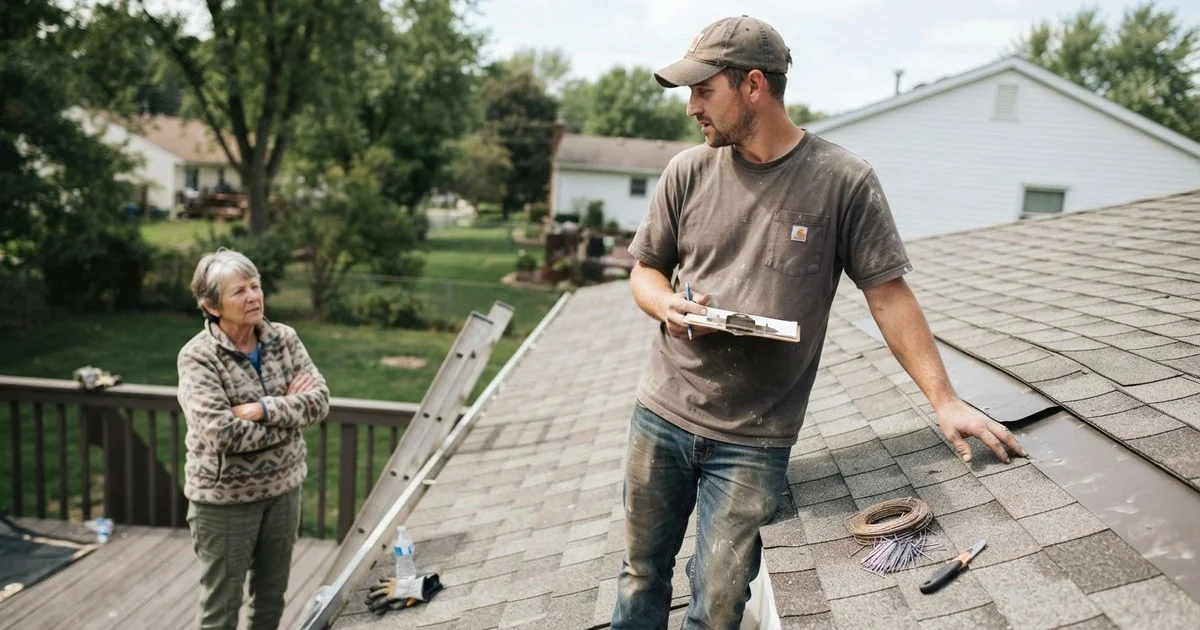
Hiring someone to work on your roof means inviting real risk onto your property, ladders, falling debris, workers moving heavy materials, and most homeowners don’t think about liability until something actually happens. Knowing how it works before you hire protects you from an unpleasant surprise.
Two different kinds of coverage matter
A properly insured Georgia roofing contractor carries two separate types of coverage, and both matter for different reasons:
| Coverage type | What it protects |
|---|---|
| General liability insurance | Damage to your home, landscaping, or property during the job |
| Workers’ compensation insurance | Medical costs and lost wages if a worker is injured on your property |
A contractor with only one of these leaves a real gap. General liability without workers’ comp means an injured worker could potentially pursue a claim against your homeowner’s policy or you directly, since their employer’s insurance doesn’t cover them.
What happens if a worker is hurt on your roof
If the contractor carries workers’ compensation insurance, as they legally should for their employees in most cases, that policy covers the injured worker’s medical costs and lost wages, not your homeowner’s insurance and not you personally. This is exactly why confirming this coverage before the job starts matters: it’s the difference between a contractor’s insurance handling an accident and it potentially becoming your problem.
What happens if the job damages your property
Dropped materials, a ladder against siding, debris in landscaping, this kind of damage happens on roofing jobs more often than anyone would like. A contractor’s general liability policy is built to cover exactly this. Reputable contractors will document and fix damage without argument when a legitimate liability policy is in place; without one, you may be left negotiating directly or absorbing the cost yourself.
How to verify coverage before hiring
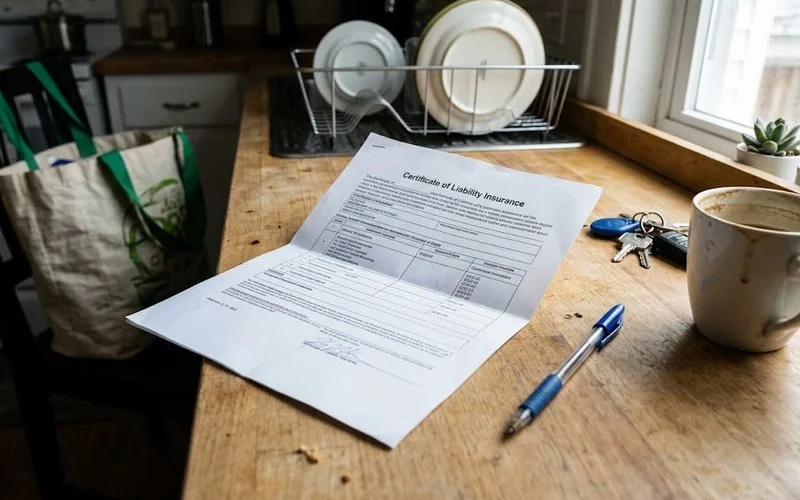
Ask every contractor for a certificate of insurance showing both general liability and workers’ compensation coverage, with current effective dates. For extra confidence on a large job, you can call the insurance carrier listed on the certificate directly to confirm the policy is active, rather than relying on a printed document alone that could be outdated or altered. Verifying insurance is one piece of a broader vetting process; see our guide on how to vet a roofing contractor and avoid storm-chaser scams in Georgia for the rest of the checklist.
What your own homeowners policy does and doesn’t cover
It’s worth knowing where your own policy fits into this picture too. Homeowners insurance is generally built to cover damage to your home and liability for accidents involving your own property, not to backstop a contractor’s uninsured business operations. Some homeowners assume their policy is a safety net for anything that happens during a home improvement project, and that assumption can leave a real gap if the contractor turns out to be uninsured. Checking a contractor’s coverage before hiring is a far more reliable protection than hoping your own policy will absorb the cost after the fact.
Subcontractors add another layer
Many roofing companies use subcontracted crews rather than direct employees, and it’s worth asking specifically whether the subcontractors are covered under the same general liability and workers’ compensation policies as the main company, or carry their own separate coverage. A contractor who can’t clearly answer this question, or whose subcontractors turn out to be uninsured, creates the same risk as hiring an uninsured company directly.
If something does go wrong
Document the damage or incident with photos immediately, and request that the contractor file a claim through their insurance rather than offering an informal cash settlement, which can leave you without recourse if the damage turns out to be more extensive than it first appears. Keep records of all communication in case a dispute arises later.
Why this matters more than it seems upfront
Liability questions rarely come up when a job goes smoothly, which is exactly why it’s easy to skip verifying coverage in the first place. The five minutes it takes to ask for and glance over a certificate of insurance before signing a contract is a small amount of friction compared to the position you’d be in trying to sort out responsibility after an injury or serious property damage has already happened.
This is general information, not legal advice. Insurance requirements and liability rules can vary by situation, so consult an attorney or your own insurance agent for guidance specific to your circumstances. Search our directory for insured, licensed roofing contractors in Georgia, and see our methodology for how listings are vetted.
Questions people ask
- What if a worker gets hurt on my roof, am I liable?
- If the contractor carries workers' compensation insurance, their policy covers the worker's injury, not your homeowner's policy. This is exactly why verifying that coverage before hiring matters, since an uninsured worker's injury can otherwise expose you to a claim.
- Who pays if a falling ladder or dropped material damages my landscaping or siding?
- A contractor's general liability insurance is designed to cover property damage caused during the job. Confirm this coverage exists and get the contractor's insurance certificate before work starts.
- What's the difference between general liability and workers' comp?
- General liability covers damage to your property or third parties. Workers' compensation covers the contractor's own employees if they're injured on the job. A contractor needs both to fully protect you.
- How do I verify a contractor's insurance is real and active?
- Ask for a certificate of insurance and, if you want extra confidence, call the insurance provider listed on it directly to confirm the policy is currently active.