
Flat and low-slope commercial roof problems: leaks, ponding and what they mean
By Mei Tan · Updated 2026-07-27
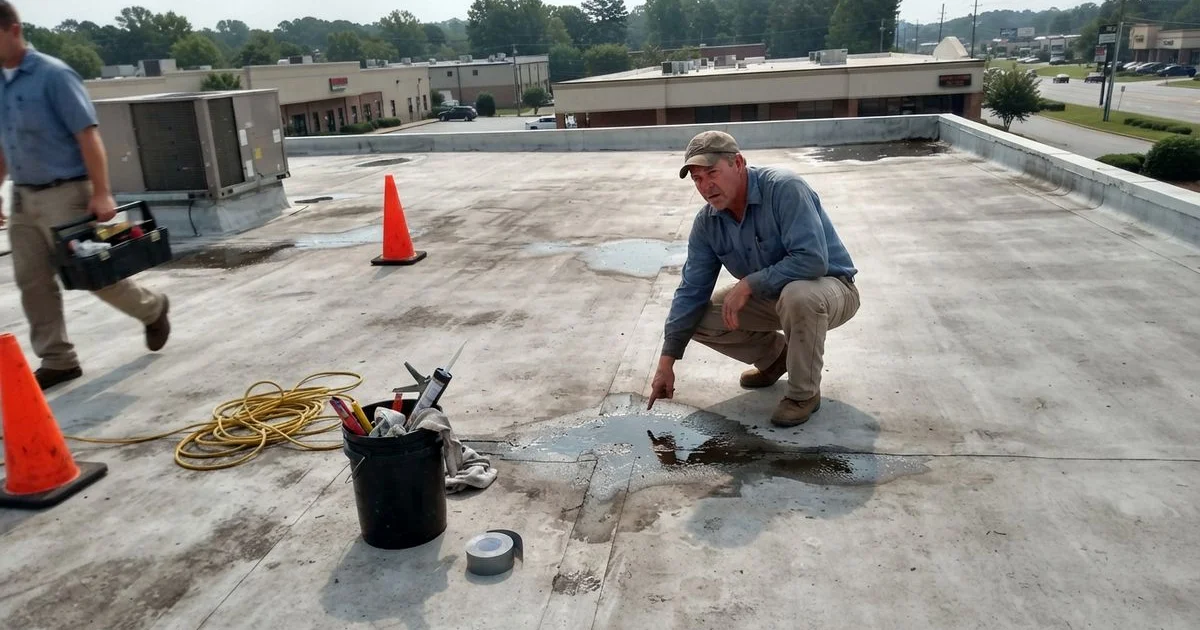
Commercial roofing faces a different set of problems than a residential shingle roof, mostly because flat and low-slope systems handle water differently, and a small issue can affect an entire building’s operations, not just one household. Here’s what property managers and business owners should watch for.
Why ponding water matters
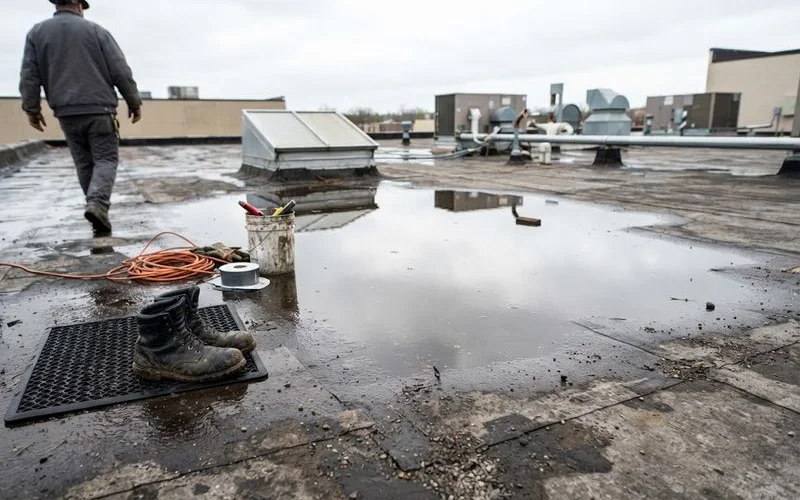
Flat and low-slope roofs, by design, drain more slowly than a pitched residential roof. Some ponding after a heavy rain is normal and expected. The problem is standing water that doesn’t drain within a day or two: it adds real weight to the structure, accelerates UV and heat breakdown of the membrane in that spot, and creates a magnified risk of a leak developing exactly where the water sits.
| Issue | What it usually means | Urgency |
|---|---|---|
| Ponding that drains within 24-48 hours | Normal drainage lag | Low, monitor |
| Ponding that lingers for days | Drainage slope or clogged drain issue | Moderate, inspect soon |
| Bubbling or blistering membrane | Trapped moisture or heat damage | Moderate to high |
| Active interior leak or ceiling stain | Membrane or flashing failure | High, address promptly |
Common causes of commercial roof leaks
Seams and flashing around HVAC units, vents, and roof edges are the most frequent failure points on a flat commercial roof, more often than the flat membrane field itself. Georgia’s summer heat cycles the membrane through repeated expansion and contraction, which stresses these seams over years. Clogged or undersized drains contribute too, since water that can’t leave the roof has to go somewhere, and that’s often down through a weak seam.
Why this matters beyond the roof itself
A leak that goes unaddressed for weeks or months doesn’t stay contained to the roof. Moisture trapped above ceiling tiles or inside wall cavities creates conditions for mold growth, which affects indoor air quality for employees, tenants, or customers inside the building. In more serious cases, prolonged water intrusion can weaken insulation and, eventually, structural decking, turning a roof repair into a much larger and more disruptive project. Our guide on roof leaks and mold covers what that trapped moisture means for a building’s occupants.
Membrane type affects the failure pattern
Different flat roofing membranes tend to fail in different ways, which changes what an inspection should focus on. Older built-up systems are more prone to blistering and cracking as they age, while single-ply membranes typically show wear first at seams and around penetrations like vents or drains. Knowing which system is installed on your building helps a contractor focus the inspection on where problems are actually most likely to start, rather than a generic walkthrough.
Business disruption is part of the cost calculation
A leak in a retail space, restaurant, or office doesn’t just cost repair dollars, it can mean closed sections of the building, damaged inventory or equipment, or a tenant dispute if the property is leased. Factoring in the cost of disruption, not just the roofing invoice, is part of why proactive inspection tends to be cheaper in practice than reactive repair for commercial buildings, even though the inspection itself has an upfront cost.
Keeping ahead of it
A twice-yearly inspection schedule, spring and fall, plus a check after any major storm, catches most developing issues while they’re still a patch rather than a full membrane replacement. Ask your roofing contractor to specifically document drain condition, seam integrity, and any areas of standing water at each visit, not just a general “looks fine” summary, since that documentation matters if a leak does show up later.
Budgeting for the eventual membrane replacement
Even with good maintenance, a commercial roof membrane has a finite service life, and planning for its eventual replacement ahead of time avoids being forced into an emergency decision when it finally fails. Ask your contractor for a realistic estimate of remaining service life during routine inspections, and use that as a planning number for capital budgeting rather than waiting for a leak to force the timeline. Property managers who track this proactively tend to get better contractor pricing too, since a planned replacement allows more flexibility on scheduling than an emergency one does.
Search our directory for commercial roofing contractors, and see our methodology for how they’re evaluated.
Questions people ask
- Is ponding water on a flat roof always a problem?
- Brief ponding after heavy rain that drains within 24 to 48 hours is common and usually not urgent. Standing water that lingers longer than that adds structural weight and accelerates membrane wear, and is worth having inspected.
- How often should a commercial flat roof be inspected?
- Twice a year is a common baseline, spring and fall, plus after any major storm. Georgia's heat and heavy summer storms both stress flat roofing membranes, so regular checks catch small issues before they become leaks.
- What are the health risks of an unaddressed commercial roof leak?
- Persistent moisture behind ceiling tiles or in insulation can grow mold, which affects indoor air quality for employees and customers. It can also weaken structural components over time if left long enough.
- Can a small leak really mean the whole membrane needs replacing?
- Sometimes. A leak is often a localized seam or flashing failure that can be patched, but on a membrane near the end of its service life, one leak can be an early sign that others are close behind.