
Is DIY roof repair safe? When to stay off the roof
By Mei Tan · Updated 2026-07-22
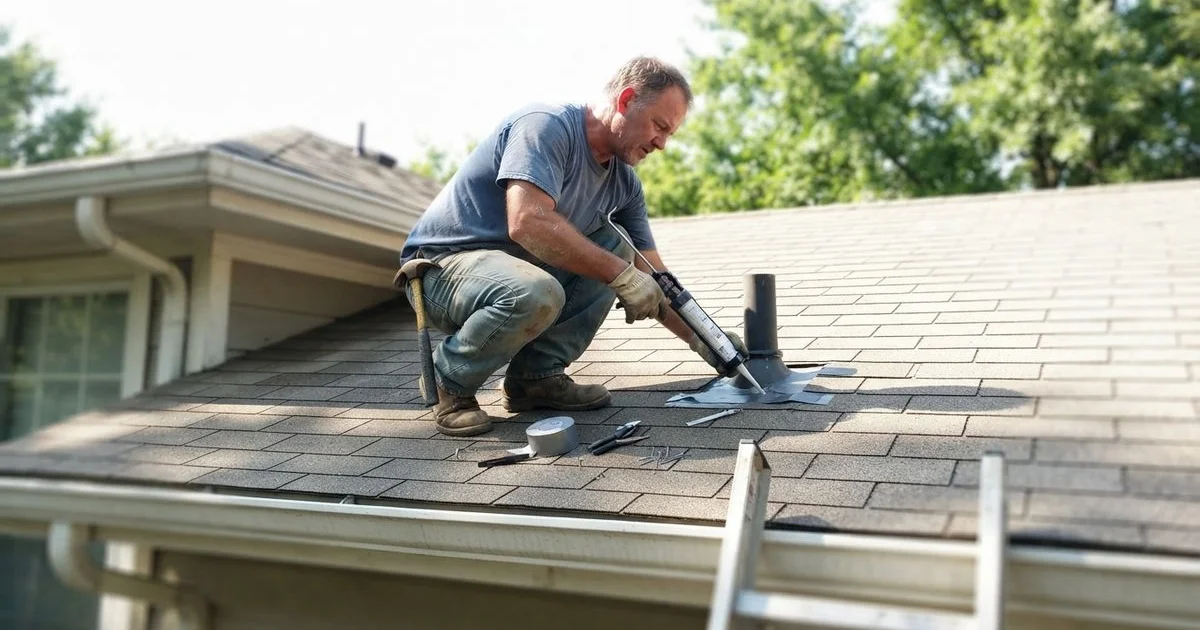
Climbing up to fix a few loose shingles feels like a manageable weekend project, and sometimes it is. But roof repair sits near the top of the list for home DIY injuries, and the risk isn’t always obvious from the ground. Here’s a realistic way to think about what’s worth doing yourself and what isn’t.
Why roof work is riskier than it looks
Falls are the leading cause of injury in roofing work, and most of them don’t happen on steep, obviously dangerous roofs. They happen on ordinary pitches, from a foot slipping on wet or granule-covered shingles, a ladder shifting, or someone stepping backward near an edge while focused on the repair itself. A roof doesn’t need to look scary to be genuinely dangerous.
Tasks that are lower risk
A short list of roof-adjacent tasks are reasonable for a homeowner comfortable on a ladder and working on a low, accessible, dry roof:
| Lower-risk task | Why it’s more manageable |
|---|---|
| Clearing leaves and debris from a low-slope roof | Doesn’t require walking the full roof surface |
| Resealing small caulk gaps around a vent, reachable from a ladder | Localized, doesn’t require standing on the roof |
| Cleaning gutters from a properly footed ladder | Off the roof surface entirely |
Tasks that call for a professional
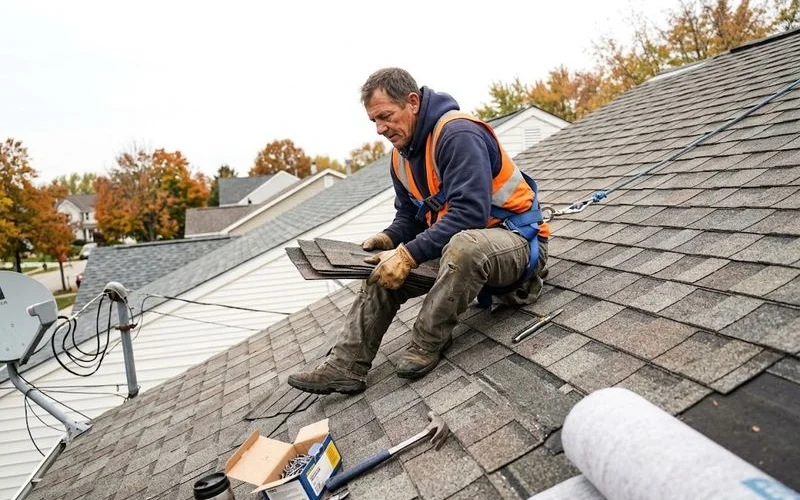
Shingle replacement, flashing repair, anything on a steep pitch, anything two stories or higher, and any repair involving structural decking are all jobs where the risk-to-savings ratio tips against DIY. Professionals use harnesses, roof jacks, and experience reading a roof’s footing that take real time to develop. A missed step here isn’t a minor mistake, it’s a serious fall risk.
Weather makes it worse
Never get on a roof that’s wet, frosted, or was recently rained on, even if the rain has stopped. Moisture on shingles or metal panels dramatically reduces footing, and it’s one of the most common conditions behind DIY roof falls. Wait for a fully dry, calm day, and skip it entirely if you’re not confident in your balance and footing under normal conditions.
Basic equipment most homeowners don’t have
Professional roofers use gear that most homeowners simply don’t own: roof jacks that create a stable platform on a pitch, a proper fall-arrest harness anchored to the structure, and rubber-soled footwear designed specifically for roof surfaces. Even a homeowner comfortable with heights in other contexts, on a ladder against a wall, for example, is working without the specific stability equipment that makes roof work survivable when something goes wrong. Buying this equipment for a single small job rarely makes financial sense next to just hiring the work out.
What a fall on a residential roof actually looks like
Roof falls are rarely from the extreme height people picture. A slip near the edge of a single-story roof still means a ten to fifteen foot fall onto a driveway, patio, or hard ground, which is enough to cause serious injury. The danger isn’t proportional to how tall or steep the roof looks from the street, it’s proportional to footing conditions and how far a person is from a stable edge or anchor point at the moment they lose balance.
If you do decide to go up, do it with someone else present
For the lower-risk tasks on the earlier list, never do them completely alone. Have someone else home who knows you’re on the roof and can call for help if something goes wrong. Keep a phone with you, not left on the ground, and set a realistic footing check before every step, especially near an edge, rather than assuming your balance is fine because it felt fine a minute ago.
When the smarter move is to call someone
If a repair involves more than a very localized, ground-adjacent fix, the math usually favors hiring a professional. A repair that costs a few hundred dollars is a lot cheaper than a fall injury, and a professional roofer also carries the insurance and experience to catch related problems, like early flashing failure, that an untrained eye would miss entirely. Once you’ve made that call, our guide on what to expect from a roof repair walks through the process from inspection to final walkthrough.
This is general safety information, not a substitute for your own judgment about your specific roof and physical ability. When in doubt, treat “stay off the roof” as the safer default. Find a licensed roofer in our directory, vetted per our methodology.
Questions people ask
- What roof repairs are reasonably safe to DIY?
- Clearing debris from a low-pitch, easily accessible roof, or resealing a small area of exposed caulking around a vent, are lower-risk tasks for someone comfortable on a ladder. Anything involving shingle replacement, flashing, or a steep pitch is a different level of risk.
- What makes roof work dangerous even for minor repairs?
- Falls are the leading cause of injury in roofing, and a roof doesn't need to be steep or high to be dangerous. Wet shingles, granule surfaces, and loss of footing near an edge account for most home DIY roof injuries.
- Should I ever get on my roof after a storm to check for damage?
- No. Wait for the roof to fully dry and for weather to clear completely. Assess visible damage from the ground with binoculars if needed, and leave the close-up inspection to a professional with the right equipment.
- Does homeowners insurance cover injuries from DIY roof work?
- Coverage varies widely by policy, and some exclude injuries from hazardous DIY activities. Check your specific policy rather than assuming you're covered.