
What to expect from a roof repair, from inspection to final walkthrough
By Mei Tan · Updated 2026-07-03
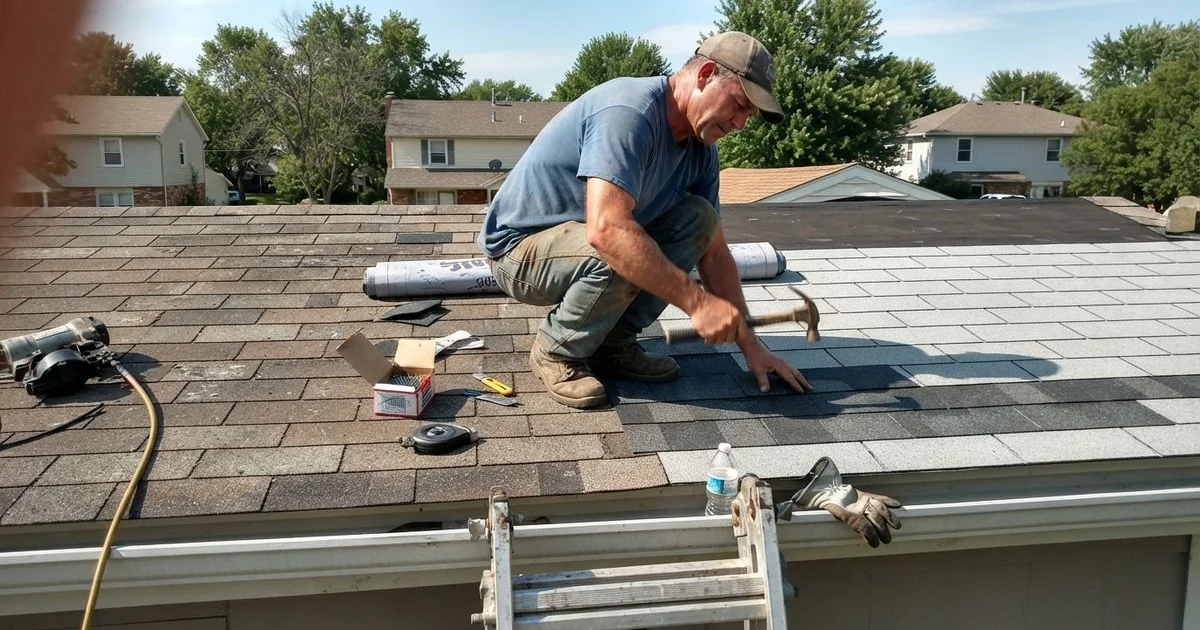
A roof repair sounds simple until it’s happening on your own house, and then every homeowner has the same questions: how long will this take, what will they actually do up there, and how do I know it was done right. This is one of the most common searches on our Georgia roofing directory, so here’s what a repair visit typically looks like from first call to final walkthrough.
The inspection comes first
A legitimate repair starts with someone getting on the roof, not just estimating from the ground or a photo. The technician is looking for the extent of the damage, whether it’s isolated or a sign of a bigger problem, and the condition of the decking underneath. This is also when they should check nearby flashing and vents, since a leak that looks like it’s coming from one spot often traces back to a seam a few feet away. If you’re tempted to climb up and look before the technician arrives, our guide on when DIY roof repair is safe covers what’s fine to check from a ladder and when to just wait for a professional.
The written estimate
After the inspection, you should get a written scope: what’s being repaired, what materials will be used, and roughly how much it will cost. For reference, small localized repairs on a typical Georgia home often run in the $260 to $410 range, a single damaged section closer to $460 to $710, and repairs spanning multiple sections can reach $740 to $1,160 or more. Storm or active leak damage tends to price higher than ordinary wear, since it often involves more urgent scheduling and hidden water damage.
| Repair scope | Typical cost range |
|---|---|
| Small (a few shingles, minor leak) | $260 - $410 |
| Medium (one roof section) | $460 - $710 |
| Large (multiple sections) | $740 - $1,160 |
What happens during the work
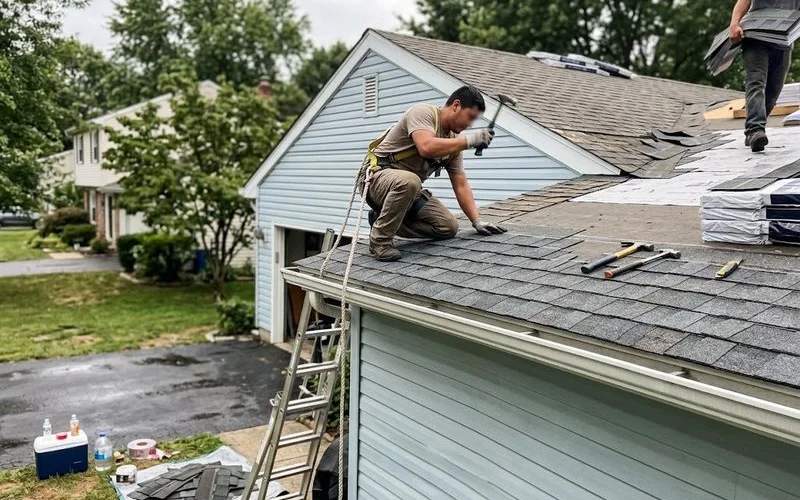
Most repairs follow a similar sequence: the damaged material is removed, the decking underneath is checked and replaced if it’s soft or rotted, new underlayment and flashing go in where needed, and the new shingles or panels are matched to the surrounding roof as closely as possible. A crew that skips checking the decking is cutting a corner that shows up later as a soft spot or a return leak.
The final walkthrough
A repair isn’t finished when the crew packs up. Ask for a walkthrough where they show you the repaired area, explain what they found and fixed, and point out anything else on the roof worth watching. This is also the point to confirm what’s covered under the repair warranty and for how long, since a workmanship warranty matters more than a materials warranty on a small job.
When a repair isn’t enough
Sometimes an inspection turns up damage that goes beyond a patch: widespread granule loss, multiple soft spots in the decking, or a roof already near the end of its expected life. A straightforward repair crew will tell you when that’s the case instead of stacking patches on a roof that needs more, and will explain why in plain terms rather than pushing you toward the bigger job.
Questions worth asking before work starts
A few questions upfront tend to head off confusion later. Ask what specifically caused the damage, not just what’s being fixed, since a leak with an unaddressed cause often comes back within a season. Ask whether the repair will match the existing roofing closely enough that it won’t stand out, particularly on an older roof where exact shingle colors may no longer be available. And ask what the crew will do if they find something worse once they’re up there, so you’re not caught off guard by a mid-job phone call asking for a decision.
Matching materials on an older roof
One detail that catches homeowners off guard is color and material matching. Shingle manufacturers discontinue colors and product lines over time, so a repair on a roof installed years ago may not match perfectly, even with the same brand and grade. A good contractor will tell you this upfront rather than let you discover it once the patch is visible from the street, and can usually suggest the closest reasonable match or, for a highly visible section, recommend blending shingles from a less visible part of the roof.
If your roof was damaged by a storm, ask whether the repair should be documented for an insurance claim before work starts, since photos and a written scope taken beforehand make a claim far easier to support. See our methodology for how we vet and rank the repair contractors listed on this site.
Questions people ask
- How long does a typical roof repair take?
- Small repairs, a handful of shingles or a localized leak, are often done in half a day. A repair covering a full section can take one to two days depending on weather and access.
- Will a repair crew need to get on my roof more than once?
- Usually once for the inspection and once for the repair itself, unless the first visit uncovers hidden decking damage that needs a follow-up quote before work continues.
- What should a repair estimate include that a lot of them leave out?
- The cause of the damage, not just the fix. A written estimate should say what caused the leak or wear, since patching the symptom without addressing the cause often means calling someone back within a year.
- Do I need to be home during the repair?
- Not for the work itself, but it helps to be reachable in case the crew finds additional damage once they're on the roof and need a decision before continuing.